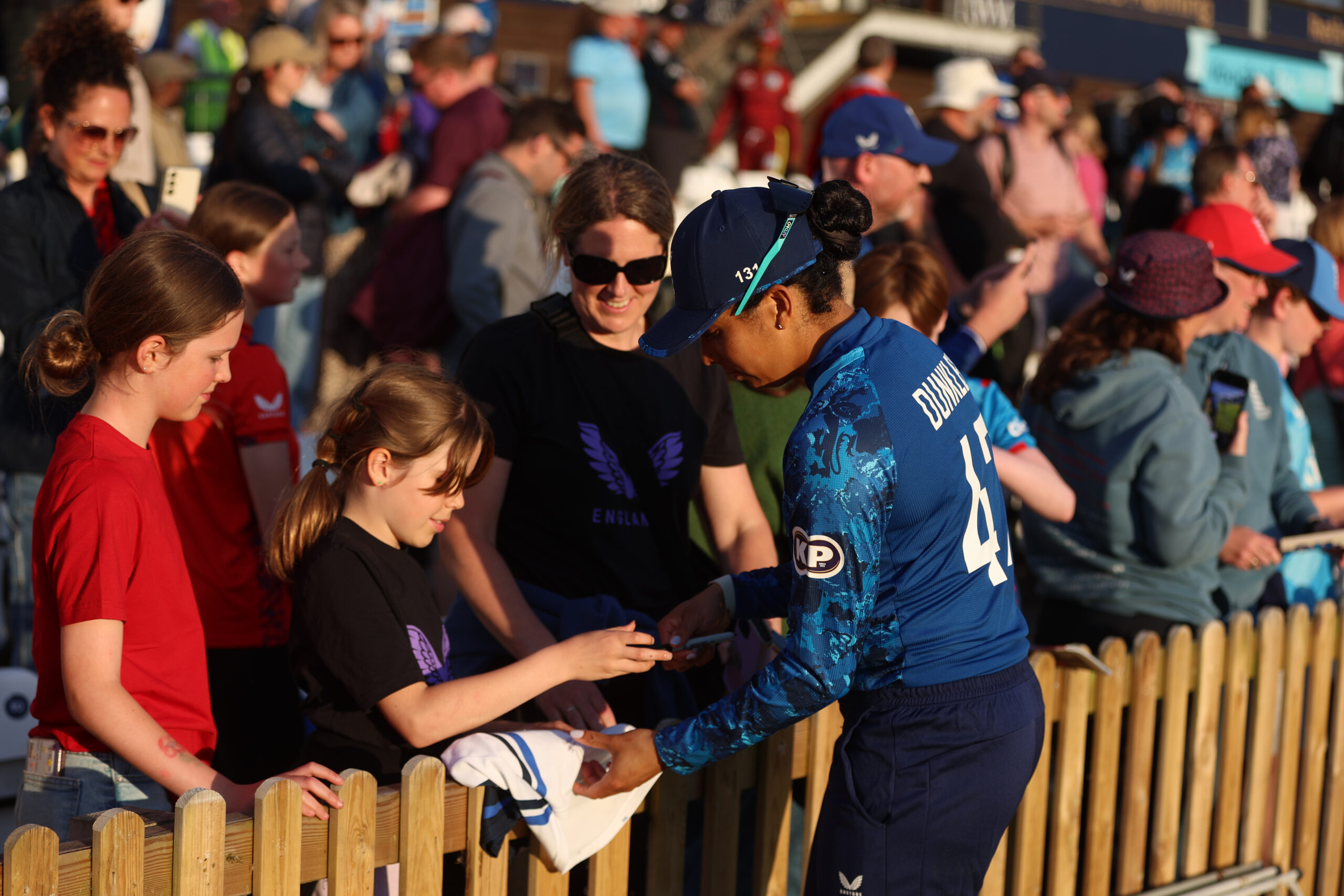
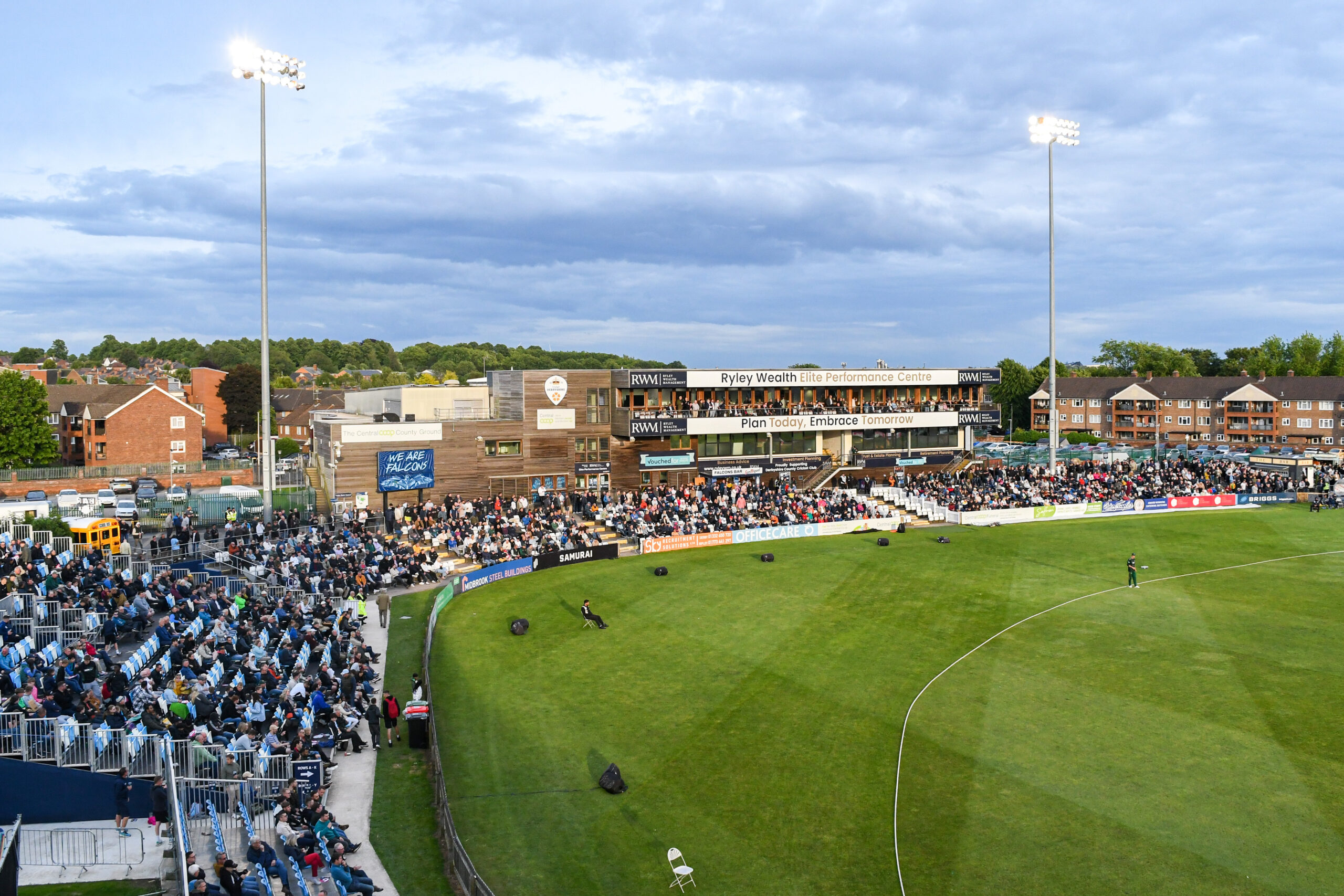
England Women host New Zealand in an IT20 at The Central Co-op County-Ground on Wednesday 20 May (6.30pm).
The Women’s T20 World Cup holders, led by Amelia Kerr, face an England side aiming to make more history in Derby.
A limited number of Early Bird tickets remain for both fixtures, with more than 75% of reserved seating already booked!
Get your Early Bird tickets now!

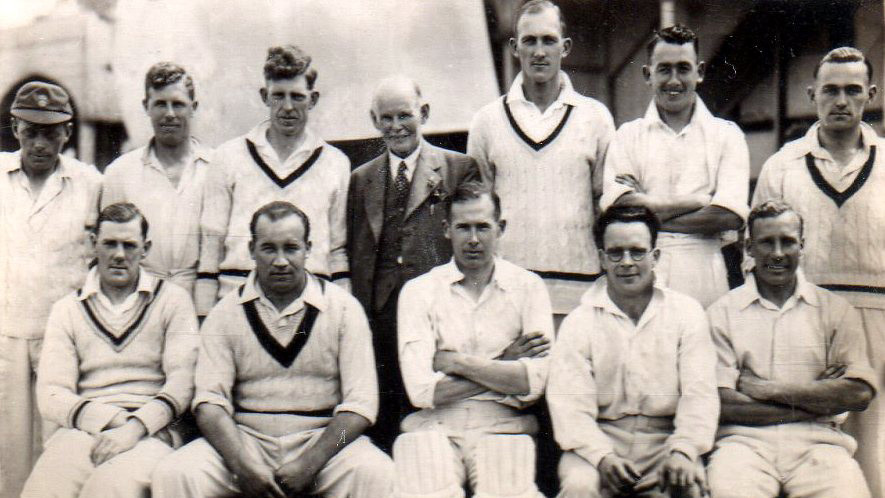
Ahead of the 2026 cricket season, we’ve asked our Heritage Officer, Photographer and Statistician to focus on three years ending in ‘6’ for a series of articles detailing highlights from the last century and a half of Derbyshire cricket.
This initial piece of three looks back ninety years to the County Championship-winning season in 1936 and will be followed by the arrival of Eddie Barlow in 1976 and conclude with the 1996 summer when Dean Jones was at the helm.
Derbyshire’s 1936 County Championship-winning summer has still to be matched despite the presence of some outstanding cricketers and teams in the intervening years.
John Shawcroft wrote the definitive version of that season; Local Heroes, published in 2006 and Shawcroft has written shorter accounts in his Derbyshire histories of 1970, 1989 and 2020.
Edward Giles also offered a comprehensive examination of the 1936 season in his book The Derbyshire Chronicles published in 2007.
So, whilst another match-by-match account of that year would certainly be rather inadequate in comparison, perhaps it is worthy to consider how remarkable was Derbyshire’s triumph.
Between 1897 and 1926 Derbyshire never finished in the top half of the County Championship. Nothing, absolutely nothing, suggested that Derbyshire would ever have the quality of personnel to become a powerhouse in English cricket.
They had been stripped of their first class status between 1887 and 1894, and in 1920 suffered the ignominy of losing 17 out of 18 Championship matches, while the other game was abandoned without a ball being bowled.
There had been some useful and long-serving players during these years; William Mycroft was the first champion fast bowler in the 1870s and 1880s, and fellow fast bowler Bill Bestwick was a legendary figure; Bill Storer was a fine wicket-keeper batter, good enough to play Test cricket for England, while Levi Wright was a fine stroke maker and outstanding fielder and the all-rounders Sam Cadman and Arthur Morton both played for the county for more than two decades.
However, the back-up players to these fine cricketers were generally of insufficient standard to allow the county to compete with the bigger counties.
The ‘Big Six’ of Kent, Lancashire, Middlesex, Nottinghamshire, Surrey and Yorkshire had dominated the game since 1878 with only Warwickshire – in 1911 – winning the County Championship over the next sixty years.
On reflection – and it was certainly the prevailing view within the county at the time – Derbyshire were actually fortunate to be in the competition, never mind in with a chance of winning it.
Breaking the ‘Big Six’ near-monopoly then, was not seen as a likely occurrence and certainly not by Derbyshire, but after the disaster of 1920, the county turned their attention to the Nursery – a form of academy of the day – under the watchful and experienced eye of Sam Cadman, a Derbyshire cricketer for a quarter of a century and one the county’s finest allrounders.
Under his tutelage, players who would become legendary names at Derbyshire were introduced into the side; Harry Elliott and Harry Storer (1920), Leslie Townsend (1922), Stan Worthington (1924), Denis Smith (1927), Tommy Mitchell (1928), Albert Alderman (1928), Alf Pope (1930) and his brother George (1933).
Additionally, Arthur Richardson (1928) made his debut, and would eventually take over the captaincy from Guy Jackson in 1931.
All of these young cricketers except for Storer were born within Derbyshire and were able to take advantage of Cadman’s guidance with support from the Rev Henry Ellison who captained the 2nd XI until 1928, when he was 60.
In fact, on 14th July 1936, the only day on which there was play, against Lancashire at Old Trafford, Derbyshire fielded an entire eleven born within the county. It’s never happened again since.
Gathering together some of Derbyshire’s greatest players, sixth place in the County Championship in 1933 hinted at the possibilities and over the course of the following five seasons, the county finished 3rd, 2nd, 1st, 3rd, and 5th – a run of performances never matched in the club’s history.
This stellar side included seven England Test cricketers, Bill Copson, Harry Elliott, Tommy Mitchell, George Pope, Denis Smith, Les Townsend and Stan Worthington.
Their records at county level are outstanding; only Kim Barnett has scored more runs than Smith in first class cricket; Townsend and Worthington are the fifth and seventh highest run scorers for Derbyshire and the former also took 969 wickets while Worthington took 624.
Pope was an outstanding all-rounder (although injury meant he only played four games in 1936), a fine fast medium bowler, and a dynamic attacking batter; Elliott ranks second only to Bob Taylor in the wicket-keeping stakes; Copson was a genuinely fast bowler with a magnificent record, and leg break bowler Mitchell remains unarguably the best spin bowler in the club’s history.
For these players – as well as the non-internationals like Albert Alderman, Charlie Elliott, Alf Pope, Harry Storer and others – to all emerge together was both fortuitous and a credit to Cadman’s work in the Nursery.
Factor in the hugely impressive captaincy and man-management of Arthur Richardson – and his predecessor Guy Jackson – and this was a highly effective cricketing unit with stylish and aggressive stroke makers, genuine fast bowlers, a superb specialist wicket-keeper, a plethora of all-rounders, and an outstanding, match-winning leg-spinner.
A large number of these men were products of the Derbyshire coalfields – like many of their predecessors and successors – and cricket for them must have seemed like a (literal) breath of fresh air in comparison to the cramped, uncomfortable and dangerous conditions underground.
Maybe their backgrounds formed them; working together, under pressure and as a team mining a seam of coal surely prepared them for beating the cricketing odds out in the open.
Shawcroft, in Local Heroes points out that there has not been a more fully representative side of their county win the Championship since Derbyshire in 1936, offering only the footballing parallel where Celtic won the 1967 European Cup with a side born within 30 miles of Glasgow.
So, what made this side so special and why, despite the greats who followed them, has the title not been won again?
Well, the obvious conclusion is that some of Derbyshire’s greatest ever players all came to maturity at the same time, and with firm and dynamic leadership from Richardson, maintained high standards and fitness. By 1936, they were experienced, with good career records and confident in their ability to win on all surfaces against allcomers.
And, critically, there were several outstanding all-rounders in the side; Les Townsend, Stan Worthington and George Pope could all have secured a place in the side with bat or ball and with the former two batting in the top six, it meant the side was beautifully balanced.
Fitness was also key; the Championship season consisted of 28 matches and five of the side played all 28, with a further four playing 26; rarely did Richardson need to look for replacements.
Derbyshire won 13 of their 28 games, three fewer than in 1935 but they only lost four. They defeated Worcestershire by an innings at New Road on 3rd July and moved to the top of the table and never relinquished the position even though this was only the halfway point of the season.
The secured the Championship despite a one wicket defeat to Somerset at Wells on 28 August because of results elsewhere, but then as if to emphasise their worth thrashed Leicestershire at Oakham School by an innings to round off the season.
Albert Alderman, Denis Smith, Les Townsend and Stan Worthington all scored more than a thousand runs, but it was the quality of the bowling – supplemented by outstanding fielding – which did most to bring the title to Derbyshire.
Bill Copson, fast and accurate, took 140 wickets at an average of 12.80 with 12 five wicket hauls, while Tommy Mitchell snared 116 victims at 20.45, taking five wickets on eleven occasions.
Alf Pope took 94 wickets at an average of 17.72 and Les Townsend’s spin brought him 54 wickets at under 20.
Three of Derbyshire’s leading run scorers in 1936 were England Test cricketers, as well as three of their four leading bowlers, a prime example of quality bringing success. Behind the stumps, another England Test cricketer, Harry Elliott completed 62 dismissals.
And the cherry on the top of the cake were the personal qualities of this band of tough professionals; as T Prettie wrote at the end of the 1936 season: “Derbyshire’s is a victory of perseverance, determination and dependability…guts and keenness”; while John Arlott asked the question” “Shall we ever see a side of quite such gladiatorial quality in the English county game again?”
Ninety years later Derbyshire supporters are still awaiting another county title; the 1950s saw the county finish 5th, 4th, 3rd, and 5th – although not consecutively – under the positive captaincy of Guy Willatt and then Donald Carr, mainly on the back of some fine fast bowlers, but the side lacked the weight of runs which would take them any higher.
Kim Barnett’s side rose to 3rd in 1991 and 5th in 1992 when he and Peter Bowler formed an outstanding opening partnership while Chris Adams, Mohammad Azharuddin, Ian Bishop, Dominic Cork, Karl Krikken, Devon Malcolm, John Morris, Ole Mortensen and Allan Warner formed a very strong side. This was a team which won one day trophies but fell just short in the longer form of the game, arguably because they lacked a high quality spinner once Geoff Miller had retired.
Miller at his peak in that side of 1991/2, might have made all the difference.
And then in 1996, Dean Jones took over the captaincy from Barnett and took the side to 2nd place in his first season, leading from the front with the bat and in the field. For some time, it seemed as if the 60 anniversary of the ’36 title would be celebrated with another triumph, but it was not to be as Leicestershire pipped them to first place.
That 1990s side was another example – just as in the 1930s – of top quality players all coming to their peak at the same time.
However, despite those wonderful post-war and more modern-day teams and equally wonderful players, the County Championship title has still only been won once by Derbyshire, by that remarkable band of locally-born men in 1936. What a glorious summer it must have been!
What will 2026?
1936, 1976 and 1996 were all legendary seasons in their own right, but what will the 2026 season bring for Derbyshire and our loyal Members?
Through the highs and lows and from generation to generation, you stand by us and push us to go again. Members are the foundation on which Derbyshire County Cricket Club is built.
And with exclusive events, added benefits and voting rights, shaping the Club’s future at all levels, Membership goes far beyond the cricketing summer.
Whether you are a Member cheering on from the stands, or supporter watching on from afar; whether you are a player for the men’s team, women’s team or within our Pathway; whether you have contributed to our past successes or are driving us on to future glory: together, We Are Derbyshire.
Prices frozen, benefits increased. Where will your Derbyshire story take you in 2026? Find out with Membership.