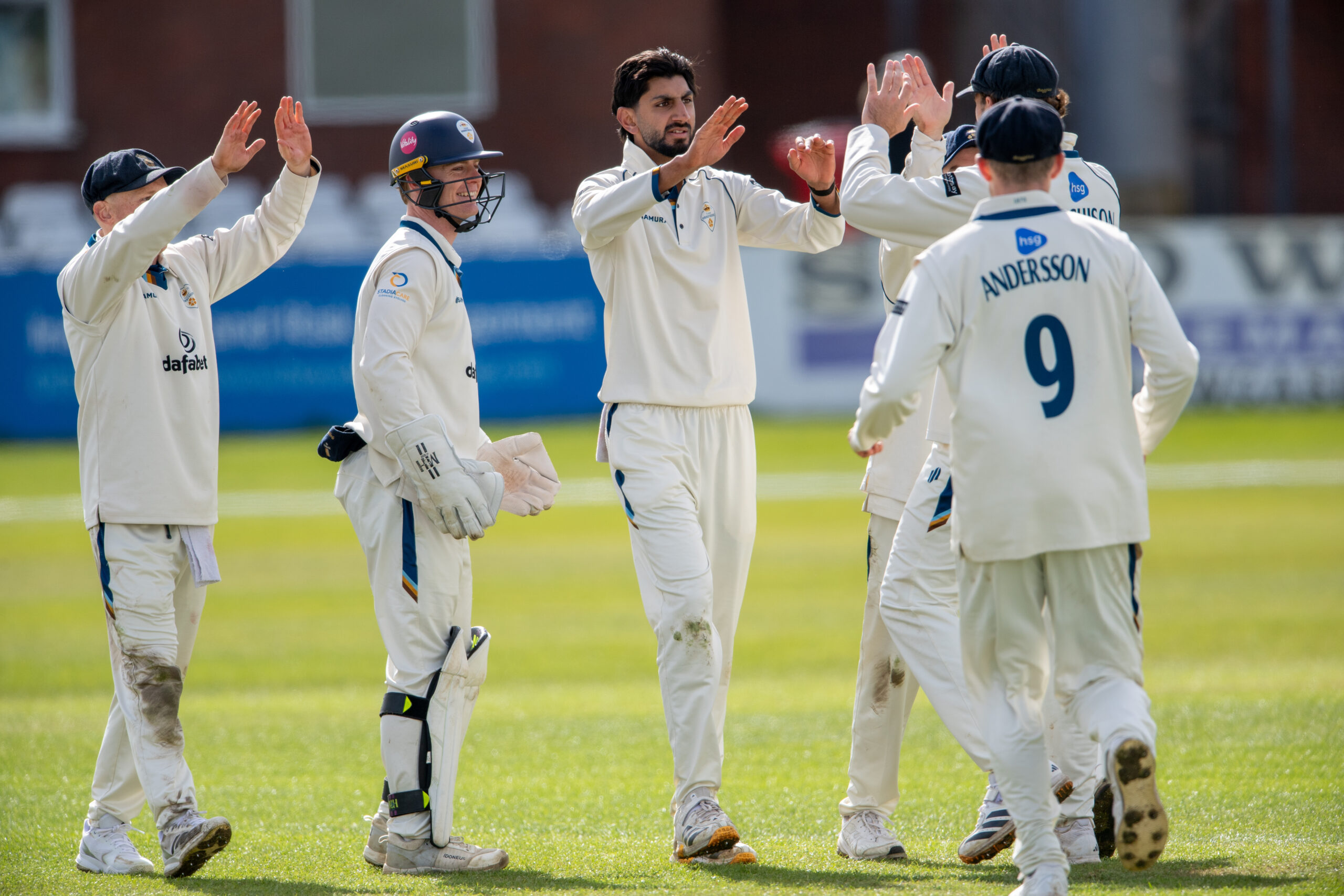
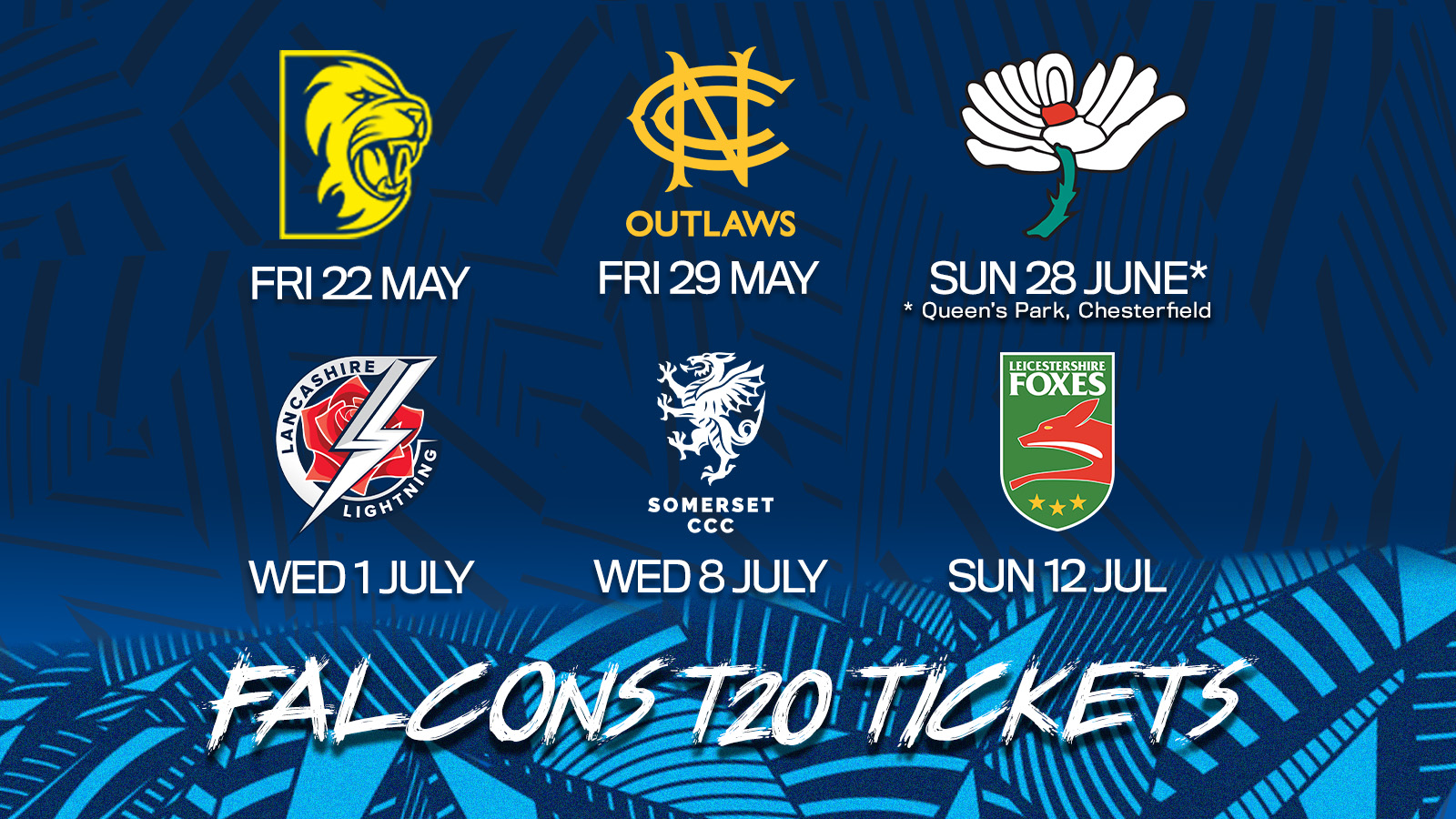
T20 cricket returns to Derbyshire this summer with the Vitality Blast!
With six huge Falcons Men’s T20s, including the East Midlands Derby and Yorkshire, there’s a game for everyone this summer!
Get your Super Early Bird tickets now!
Ahead of the 2026 cricket season, we’ve asked our Heritage Officer, Photographer and Statistician to focus on the years ending in ‘6’ for a series of articles detailing highlights from the last century and a half of Derbyshire cricket.
The initial piece of three looked back ninety years to the County Championship-winning season in 1936 and will conclude with the 1996 summer when Dean Jones was at the helm.
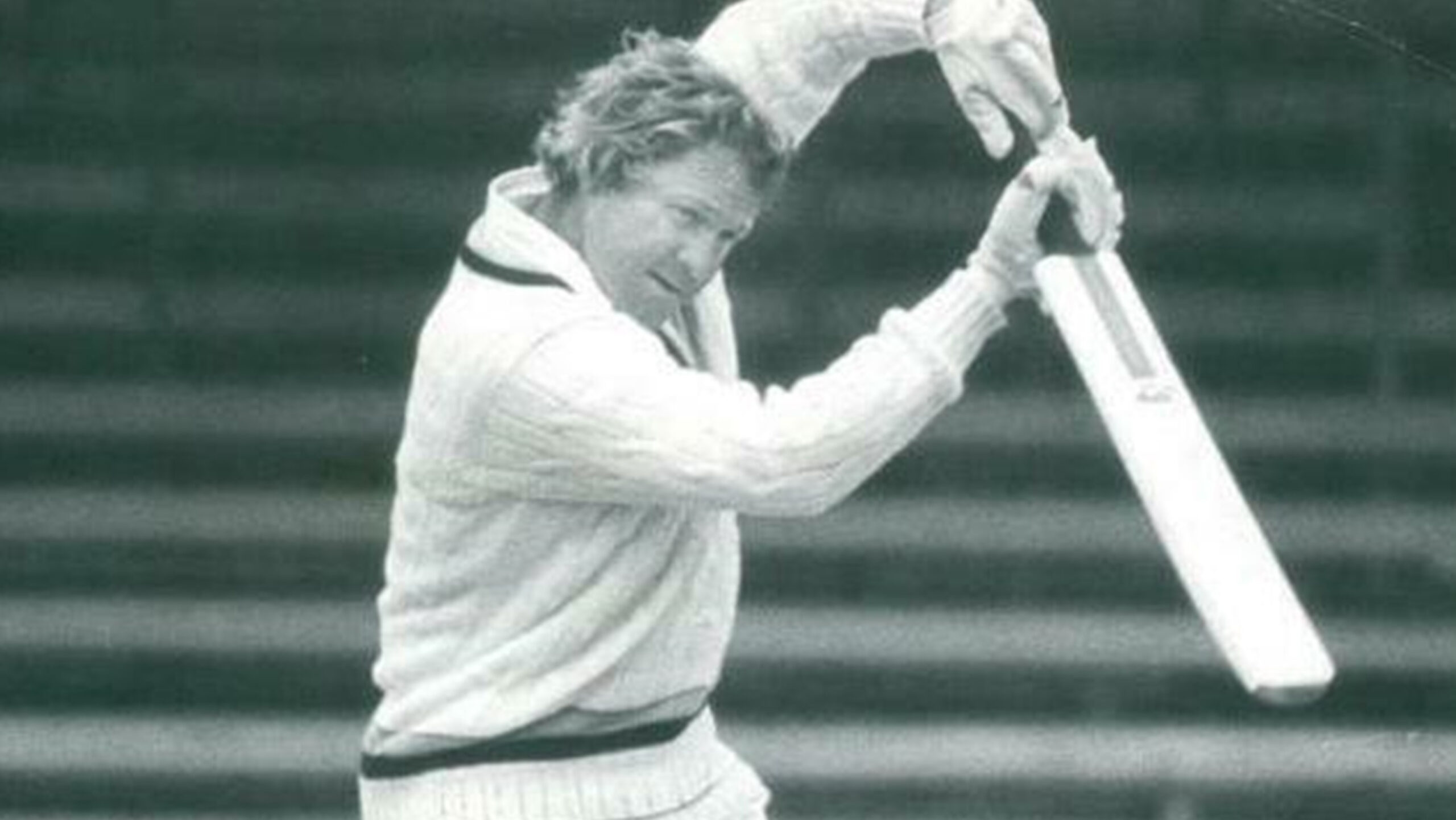
For the second ‘6’ season, we’re going back to 1976, the hottest summer of the 20th century which featured a Test series dominated by the West Indies and the arrival in Derbyshire of Eddie Barlow.
Temperatures reached 90 degrees Fahrenheit on 16 consecutive days in 1976, water courses ran dry, roads melted and drought conditions were widespread across the country.
The West Indies beat England 3-0 in a one-sided Test series as, with Viv Richards and Michael Holding to the fore, the tourists overwhelmed the host side on packed grounds with parched outfields.
For Derbyshire it was a summer which saw them continue on their nomadic way, begun early in the 1975 season following a tenancy dispute with the local authority. Having decided to abandon the County Ground in May 1975, all of 1976’s fixtures were scheduled for Buxton, Chesterfield, Heanor, Ilkeston, Long Eaton’s Trent College and Burton-on-Trent’s Bass Worthington Ground and Ind Coope Ground.
The County ground remained as the club’s headquarters; the offices were still in use and players could practice in the nets, but it was a significant challenge to take every home game to a different venue. It might have been easier to use one single ground, but seven venues hosted Derbyshire cricket that summer and from a young spectator’s perspective there was a real joy in watching cricket at so many different grounds.
Derbyshire were undeniably in the doldrums going into the 1976 season. Since 1970 when the county finished seventh in the Championship in during their centenary year, performances had gone downhill. Following the retirements of their leading players from the 1960s – Ian Buxton, Peter Gibbs, Ian Hall, Brian Jackson, Derek Morgan, Harold Rhodes and Edwin Smith – the county slumped to the bottom of the table in 1971 and 1972, 16th in 1973 and back to 17th in 1974. Fifteenth position in 1975 was a minimal improvement and a Gillette Cup semi-final against Middlesex that year heralded improvements in the one day game, but there was still considerable room for improvement.
George Hughes, a local businessman joined the committee and became chairman shortly afterwards and his chairman of cricket, Charlie Elliott, a member of the 1936 Championship-winning side reported that the club was already in talks to sign a major overseas player who he regarded as the best available player in world cricket.
At the time, it was reputed that Garry Sobers was being paid £5,000 for a summer at Trent Bridge, and that he was the highest-paid cricketer in the country. Derbyshire, with their ebullient new chairman Hughes, offered Barlow £10,000.
The cricket world was staggered by this audacious move, although Hughes, addressing the 1976 Annual General Meeting in The Grandstand Hotel said; “…these gentlemen (pointing at Elliott and committee colleagues on the front row), have assured me that Barlow will make up ten places in the championship…”
Edgar John Barlow arrived in April 1976 and met up with the club’s existing captain Bob Taylor and the rest of the Derbyshire squad which included high class England Test bowlers Alan Ward and Mike Hendrick and some promising local talent amongst the batters, Tony Borrington, Harry Cartwright, Alan Hill and Geoff Miller who was developing into an off-spinning all-rounder. Behind the wicket, Taylor remained matchless.
The season got off to a perfect start with two wins on the opening weekend of the season, beating Glamorgan by eight wickets at Chesterfield in a Benson and Hedges Cup game and defeating Lancashire on the same ground the following day by the narrower margin of five runs in the John Player League.
Barlow took three for 37 and scored 69 against Glamorgan and after making 77 against Lancashire with four huge sixes, then took two for 36. For two days, at least, the doldrums were forgotten as Barlow took Derbyshire to two fine victories.
Maintaining that start proved impossible and over the course of the summer the side took one step forward and another one backwards as Derbyshire won 17 matches and lost 20 in games where there was a definite result.
In mid-June, Bob Taylor, who maintained that there had been a downturn in his wicketkeeping standards decided to give up the captaincy. Nobody else had noticed any loss of form but Barlow was the obvious replacement at the helm and on 13th June he led his side out at Abbeydale Park, Sheffield to face Yorkshire.
But despite his excellent start, Barlow had struggled. Some voices within the county were questioning his worth, particularly in light of his salary and performances had been adequate, but not much better.
On 28th July, Surrey arrived at Ilkeston to face Derbyshire who had lost their previous two games, to Kent and Glamorgan. Surrey batted first and scored 253 for eight wickets declared after 99.4 overs, Barlow taking four for 53.
The second day was dominated by Barlow who played what I still regard as my favourite innings and one of the finest ever played by a Derbyshire cricketer.
Barlow made 217 out of 352 for seven with the next highest score being Alan Hill’s 35. Barlow’s innings included 25 fours and six sixes and he scored 138 runs in the session between lunch and tea. It was outstanding batting against a bowling attack which included Geoff Arnold, Robin Jackman, Pat Pocock and Intikhab Alam – all Test match bowlers.
Spinners Fred Swarbrook and Geoff Miller cleaned up in the Surrey second innings taking five wickets apiece leaving Derbyshire to chase just 105 runs to win. It wasn’t straightforward – at one stage the score was 21 for three – but Barlow made 30 before Taylor and Swarbrook saw their side home.
Despite Barlow’s brilliance, this wasn’t the outstanding team performance of the season. That accolade fell to the side which beat Lancashire at Buxton towards the end of August in one of the most remarkable matches in the county’s history.
Lancashire won the toss and batted first in hot and humid conditions, a far cry from the snow-affected game 14 months earlier on the same ground. Harry Pilling scored 95 out of 290 all out as Keith Stevenson impressed with five wickets.
Phil Sharpe, opening the batting in his final season at Derbyshire scored 46 but Derbyshire’s reply of 139 was rather shoddy as Bob Ratcliffe took five for 46.
The follow-on was enforced by David Lloyd and Derbyshire made a better fist of it second time around. Barlow had been struck by a delivery from Peter Lever in the first innings and cracked a thumb. As a result, he didn’t walk out to bat in the second innings until seven wickets were down and his side 82 runs ahead.
In just 77 minutes, Barlow and Swarbrook added exactly 100 runs for the eighth wicket, as Barlow made an inspiring 73 with two sixes and ten fours. When the last three wickets fell cheaply, Lancashire required 202 runs to win.
Lancashire moved to sixty without loss before Miller, Stevenson and Swarbrook all struck to leave the visitors on 72 for five. Jack Simmons rallied down the order as did Peter Lever, but Hendrick cleaned up the tail to give Derbyshire victory by 15 runs.
It was only the second time Derbyshire had won a game after following-on, the first instance coming against Sussex at Hove in 1883, while it’s only happened once since against Nottinghamshire at Trent Bridge in 1984.
And there were other highlights;
But above all, it was Eddie Barlow who was the outstanding contributor. He scored 1,897 all format runs and took 80 wickets; the best all round performance for Derbyshire since Les Townsend scored 1,966 runs and took 90 wickets in 1933.
Players were clearly developing under his tutelage and there was more to come in 1977 and 1978 as Barlow laid the foundations for Derbyshire’s 1981 NatWest Trophy title win.
But more importantly to those on and off the field, it was apparent that Derbyshire now had a leader who could help the county compete against all-comers and his approach to the game set the benchmark for the Derbyshire sides which followed under the captaincy of Barry Wood, Kim Barnett and Dean Jones.
The summer of 1976 was not a successful one in terms of league positions or progress in the two knockout cups, but it was obvious that things were changing and a year later Derbyshire would finish in seventh place in the Championship table and in 1978 a Lord’s cup final was the reward for a magnificent series of games in the Benson and Hedges Cup.
By the start of 1977, Derbyshire had resolved their differences with the council and cricket returned to the County Ground, but that long, hot summer of 1976, when Eddie Barlow bestrode the county with some magnificent match winning performances, will live long in the memory.
What will 2026 bring?
1936, 1976 and 1996 were all legendary seasons in their own right, but what will the 2026 season bring for Derbyshire and our loyal Members?
Through the highs and lows and from generation to generation, you stand by us and push us to go again. Members are the foundation on which Derbyshire County Cricket Club is built.
And with exclusive events, added benefits and voting rights, shaping the Club’s future at all levels, Membership goes far beyond the cricketing summer.
Whether you are a Member cheering on from the stands, or supporter watching on from afar; whether you are a player for the men’s team, women’s team or within our Pathway; whether you have contributed to our past successes or are driving us on to future glory: together, We Are Derbyshire.
Prices frozen, benefits increased. Where will your Derbyshire story take you in 2026? Find out with Membership.
Wed 8th April 2026
Tue 7th April 2026
Mon 6th April 2026
Sun 5th April 2026