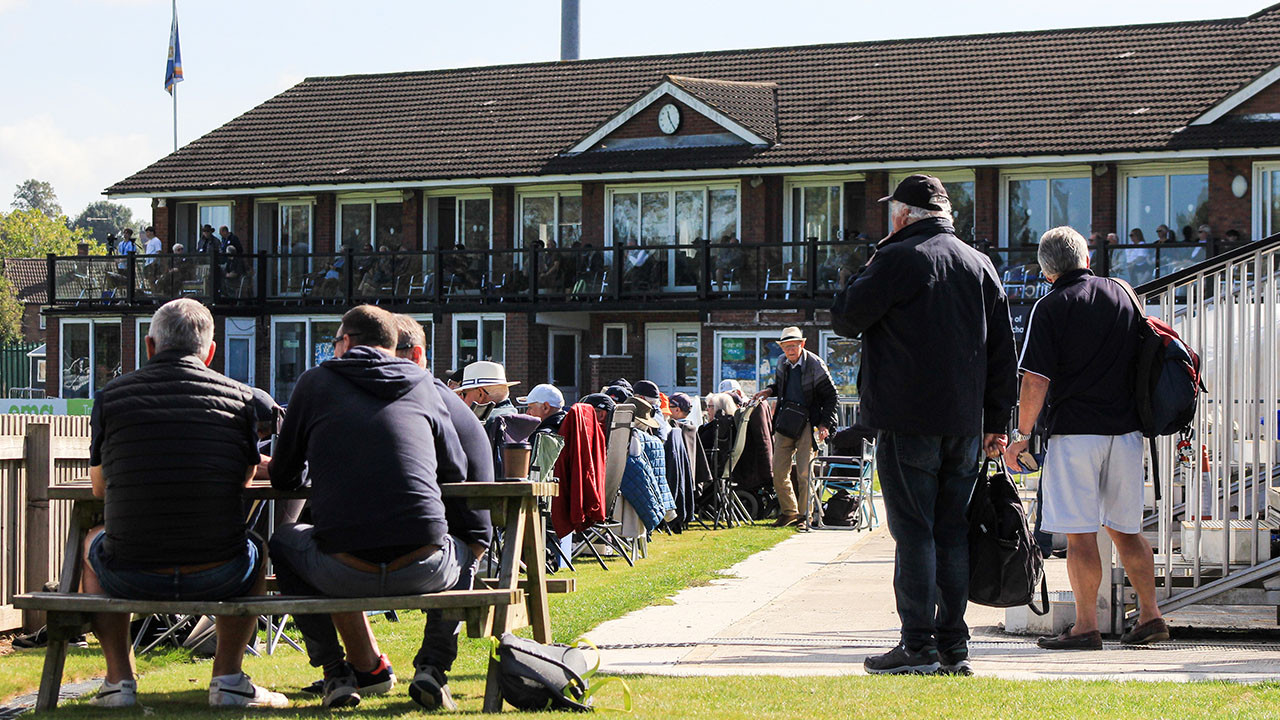
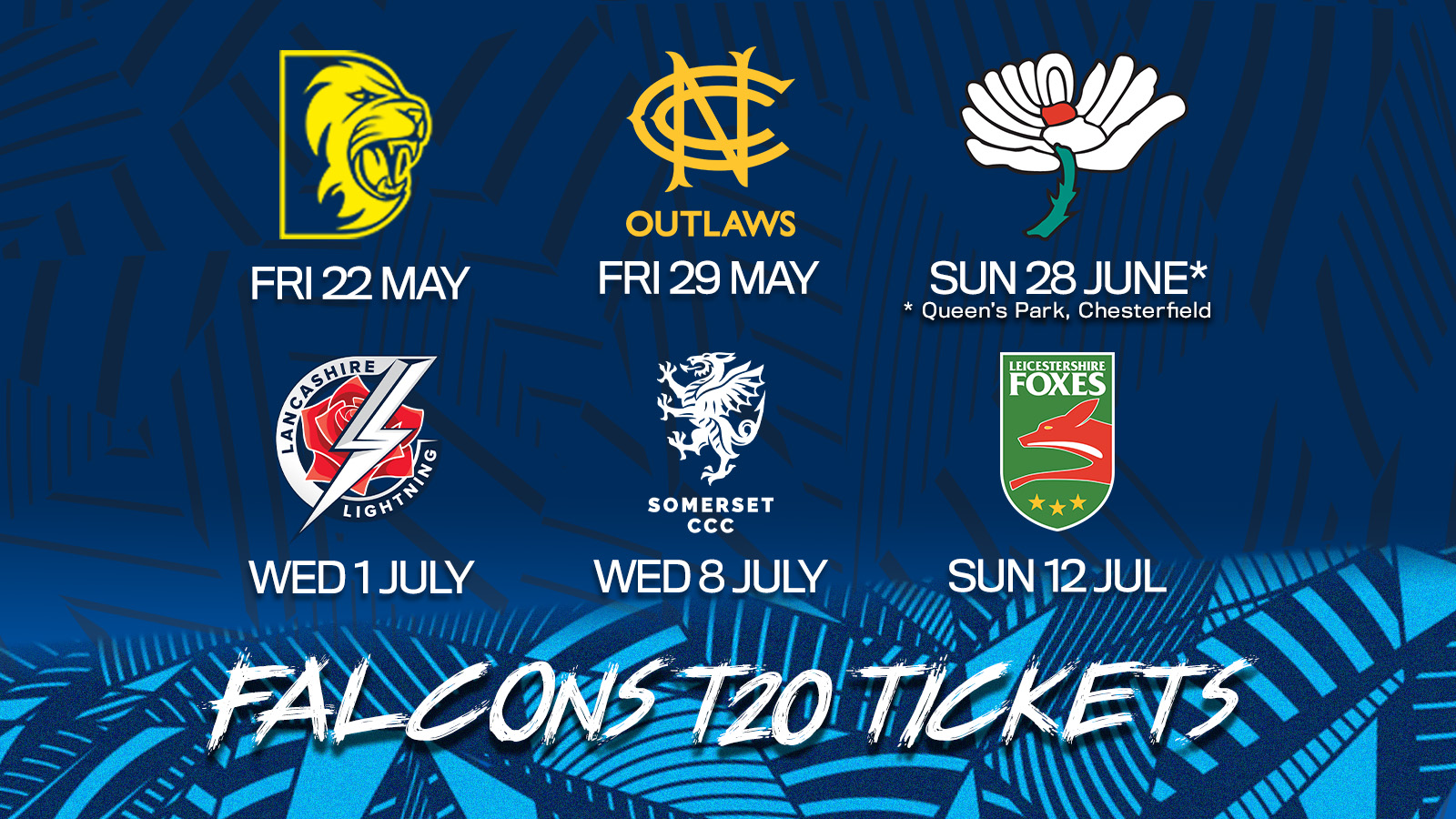
T20 cricket returns to Derbyshire this summer with the Vitality Blast!
With six huge Falcons Men’s T20s, including the East Midlands Derby and Yorkshire, there’s a game for everyone this summer!
Get your Super Early Bird tickets now!
Ahead of the 2026 cricket season, we’ve asked our Heritage Officer, Photographer and Statistician to focus on the years ending in ‘6’ for a series of articles detailing highlights from the last century and a half of Derbyshire cricket.
The first two seasons placed the focus on the 1936 County Championship-winning summer and the second harked back to the hot summer of 1976 and Eddie Barlow’s initial impact on Derbyshire cricket.
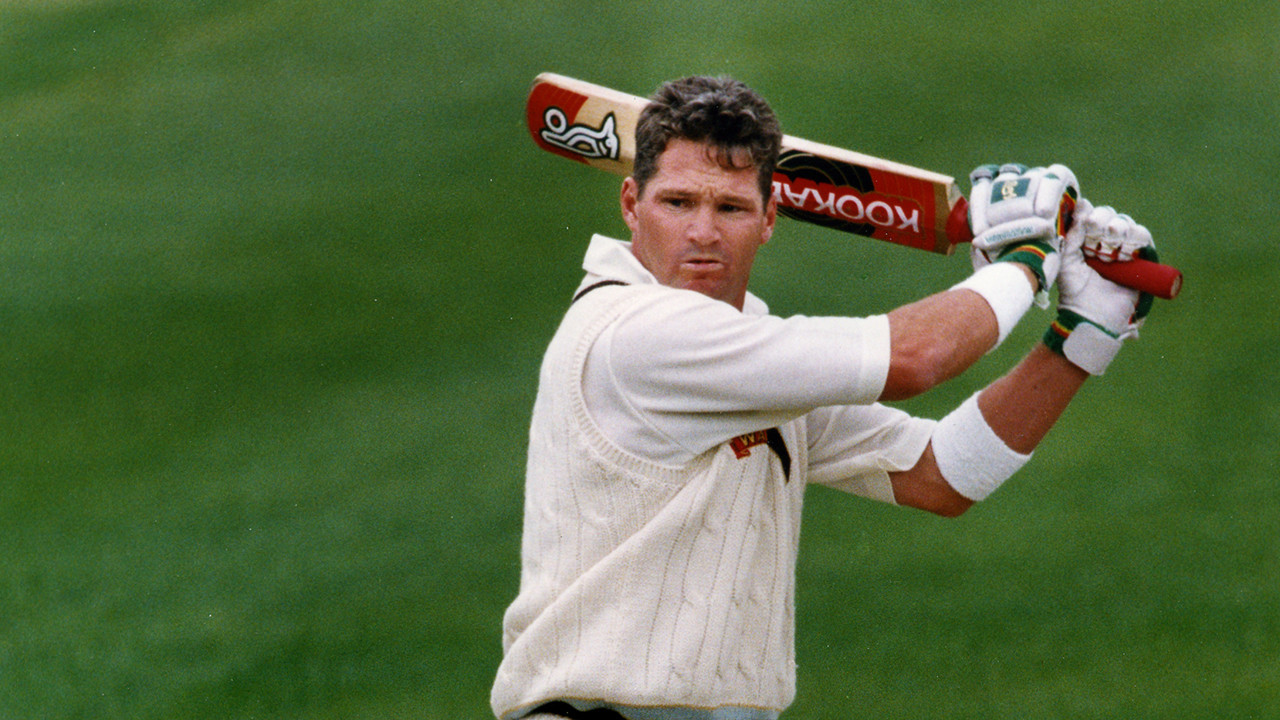
We conclude the series with Dean Jones’ arrival at Derbyshire and the 1996 season which saw the county go so close to repeating the title win of 1936.
In 1991 Derbyshire finished third in the Championship, their best placing since 1954 and fifth in 1992 having created a highly competitive side under the shrewd management of Coach Phil Russell and captain Kim Barnett.
Their policy was to prepare fast pitches wherever possible and to recruit, develop and select fast or fast-medium bowlers and hard hitting batters, strong in defence but capable of destroying opposition attacks.
Barnett forged the county’s most successful opening partnership with Peter Bowler and in 1991 with future and current England Test players Chris Adams and John Morris alongside the Indian Test star Mohammad Azharuddin, plus solid back-up in the form of Bruce Roberts and Tim O’Gorman, Derbyshire had a batting line-up capable of competing strongly in all forms of the game.
With the ball, Russell and Barnett had long been advocates of the West Indian way. The all-conquering West Indies side of the 1970s and 1980s had dominated world cricket by developing a remarkable array of high speed and high class pace bowlers together with a dazzling array of stroke makers who could destroy any bowling attack in the world.
So when Michael Holding arrived in 1983, succeeded by Ian Bishop as an overseas player in 1990, Derbyshire announced to the county game that pace was to be high on their agenda henceforth.
Over the course of the late 1980s and through to the end of the century, fast bowlers, albeit rarely locally-produced as they had been during the first hundred years of the club’s existence, came to the fore.
Paul Aldred, Simon Base, Dominic Cork, Kevin Dean, Phil DeFreitas, Andrew Harris, Devon Malcolm, Ole Mortensen, Paul Newman and Allan Warner joined forces with either Holding or Bishop to form a quality pace attack and during this period Cork, DeFreitas and Malcolm all opening the bowling for England in Test matches.
By the time this positive and classy team had taken Derbyshire to the RAL Sunday League title in 1990 with help from the South African all-rounder Adrian Kuiper and the Benson and Hedges Cup in 1993, Derbyshire supporters were able to enjoy watching a highly competitive, experienced and successful side.
However, 1994 and 1995 were difficult seasons for Derbyshire. Morris left at the end of 1993 and Bowler departed at the conclusion of the following season and a drop in the county table to the lower reaches was the outcome. Mortensen was approaching retirement and the three England Test bowlers were often required by their country.
Moreover, since Geoff Miller retired in 1990, Derbyshire had not been able to find a replacement spin bowler. Miller played 34 Tests for England and took 832 wickets for the county, a natural and long-serving successor to Tommy Mitchell and Edwin Smith.
A match-winner on many occasions, especially on wearing final-day pitches, Geoff Miller at his peak would have been a natural foil for the quicker bowlers. Regrettably, even to this day, Derbyshire – despite several false starts – have yet to discover a replacement of equal stature and ability to Miller in the spin-bowling department.
Kim Barnett, still holding most Derbyshire batting and appearance records to this day had decided to make 1995 his last as captain. He admitted to this writer in a 2020 interview that he perhaps should have stepped down following the Benson and Hedges Cup triumph in 1993 but it was in 1995 that he announced that season would be his final one at the helm.
With a new chairman, Mike Horton at the head of the committee and an improving financial position following several years of staring into the abyss, the Australian international Dean Jones was recruited as Derbyshire’s overseas player in 1996 and took over the captaincy in the process.
Jones was recognised as a fine player, extremely competitive and combative with an outstanding career record. Although his Test career had ended by this point, 3,361 runs for an average of over 46 plus over 6,000 runs at 44 in One Day Internationals were clear indicators of his talent and his arrival was eagerly anticipated.
In a summer in which Derbyshire finished second in the Championship, 27 points behind the winner Leicestershire, it could be argued that the opening game of the season was the deciding one, the eventual champions winning at Derby by six wickets despite Derbyshire’s first innings of 362 for eight declared in which Barnett made 200 not out. Their second innings 89 – Alan Mullally taking six wickets to complete a match haul of 11 – left the visitors requiring 137 to win with a session and a half to spare.
A high scoring draw followed against Yorkshire at Abbeydale Park, notable for Jones’ 214 and a fine 101 from local youngster Johnny Owen. Requiring 288 to win on the final day, Derbyshire made a bold effort but ended the game on 248 for eight.
Inspired by Devon Malcolm, Derbyshire beat Glamorgan in Cardiff despite the home side only requiring a fairly modest 218 to win. However, once Malcolm and Harris had reduced them to 3-4, the die was cast. All ten Glamorgan wickets were bowled, leg before wicket or caught behind in a demonstration of high quality, accurate pace bowling.
Owen once again impressed in Derbyshire’s first innings, scoring 105 while Colin Wells made a fine 165.
Draws in a rain-affected game against Essex at Derby and a high scoring match against Surrey at The Oval meant just one win and one defeat in the opening five matches.
The match in South London produced 1,537 runs, a record for matches between Derbyshire and Surrey and still the eighth highest match aggregate in Derbyshire’s history. Derbyshire were set 353 to win on the final day and held out on 246 for nine with Cork undefeated on 82. Colin Wells could barely walk, scoring 82 in the first innings in spite of a badly injured foot. Such was his injury that he had to be assisted down the pavilion steps in the second innings and at tea, he and Cork took their refreshments seated in deckchairs on the outfield as Wells felt unable to climb the steps once again. Paul Aldred joined Cork to save the match late in the day, facing 71 balls in scoring just seven runs.
If up to this point Derbyshire had never impressed sufficiently to give the impression they could maintain a push for the title, the next three games offered plenty of evidence to the contrary.
At Southampton, Hampshire were beaten by 54 runs after Chris Adams had played one of the great innings for Derbyshire, scoring 239 with five sixes and 23 fours, ably assisted by Adrian Rollins who made 131. Although Hampshire secured a modest lead and then dismissed Derbyshire for 192, the home side were skittled for 116 with Matthew Vandrau, an off-spinning rarity in the Derbyshire eleven, taking six for 34.
A weakened Derbyshire side then thrashed the touring Indians at Derby by 10 wickets, Malcolm opening the batting in the second innings and scoring 12 of the 13 runs required before Derbyshire produced one of the greatest all round matches performances in their history to defeat Middlesex, also at Derby in a game which also gave Derbyshire followers their first glimpse of Kevin Dean who made his first class debut.
Derbyshire made 321 and 383 for two as Adams, maintaining outstanding form with the bat scored 125 and 136 not out, and Jones adding an unbeaten 100. Andrew Harris then took over. Bowling at a good pace with a strong, repeatable action and threatening the stumps with almost every delivery, he took six for 43 and six for 40 – 12 for 83 in the match – and secured a massive 363 runs victory for his side.
Cork returned from England duty at Northampton although Harris was injured. Despite this, Derbyshire’s three pace bowlers in this game were all England Test players – Cork, Malcolm and DeFreitas. Disappointingly, however, it was the great West Indian Curtley Ambrose who produced the outstanding performances of the game taking five for 15 in Derbyshire’s paltry first innings of 98 and six for 55 in their improved 239 second time around. And although Derbyshire’s England trio all managed two wickets apiece in the Northamptonshire second innings, the home side won by four wickets on a pitch made for Ambrose but which should have suited Derbyshire’s pace trio too.
Derbyshire rested most of their pace attack for the tourist fixture against South Africa A at Chesterfield , a game which offered an insight into the future of South African Test cricket with Nicky Boje, Herschelle Gibbs, Jacques Kallis and Lance Klusener all featuring for the visitors, although in a summer of high scoring draws, this was another one.
For Derbyshire, Adrian Rollins had an interesting game – he kept wicket, batted and bowled.
From this point, Derbyshire began a run of form which suggested that the County Championship could return to the county for the first time since 1936 as they embarked on a six game run which brought about five wins and a draw.
In a summer which had already produced the remarkable thrashing of Middlesex at Derby, Derbyshire’s win at Old Trafford against Lancashire topped even that.
From a distance the pitch appeared to be flat; not ideal for Derbyshire’s pacemen and Lancashire’s 587 for nine declared suggested that Derbyshire would do well to escape with a draw. Jason Gallian scored 312 in 11 hours and 10 minutes for the hosts as Cork, Defreitas and Harris took two wickets for 273 between them.
In reply, Jones declared over 100 runs in arrears after Adams had made another century and Karl Krikken, his sole first class hundred, 104 batting at number nine. Together with Cork who scored 83 not out batting at ten, the pair added 198 for the eighth wicket, a record which stands for the county to this day.
Lancashire added 174 for three in their second innings to set Derbyshire 287 in 65 overs on a deteriorating pitch taking spin.
They quickly lost Rollins and Adams before Jones joined Barnett at 22 for three and added 198 runs for the third wicket, Barnett making 92 and Jones 107. The middle order wobbled and the majority of Derbyshire supporters in the crowd concluded that a creditable draw was the likeliest outcome. Dominic Cork thought otherwise, as he did so often throughout his career, when he arrived at the wicket with 49 needed and two wickets in hand and five overs remaining.
He hit his first ball for six, and then took 17 runs off an over, and made 34 not out off 16 balls to take Derbyshire to a stunning victory with only three balls remaining.
Although the next match was another high scoring drawn affair against Kent at Derby, two bowlers excelled, Malcolm taking 11 wickets in the match and Dean Headley recording eight for 98 in Derbyshire’s first innings including a hat trick – Barnett, Adams and Jones forming a high quality trio.
Thereafter, Derbyshire marched on with four wins in as many matches, firstly defeating Gloucestershire at Derby by seven wickets with DeFreitas taking five for 72 in the first innings and Derbyshire requiring only 87 runs to win the game.
Sussex were beaten at Hove by 47 runs with an exciting final day when Malcolm took five for 96 to add to his five for 119 in the first innings.
One of the more satisfying wins of the summer came next when Nottinghamshire were hammered by 303 runs at Derby. There was almost parity after the sides’ first innings when Jones made 105 out of Derbyshire’s 341 before the visitors replied with 317.
Barnett (103) and Adams (106) then made hay in the second innings allowing Jones to declare on 377 for eight leaving Nottinghamshire requiring 402 to win. Malcolm and Defreitas bowled unchanged for the 31.3 overs necessary to bowl Nottinghamshire out for 98, Malcolm finishing the game with seven wickets and DeFreitas with nine.
Chesterfield was the venue for the game which saw Derbyshire rise to the summit of the County Championship table for the first time in 1996, and the last time to date.
After a delayed start, Jones won the toss and inserted Worcestershire, who despite Phil Weston’s 100 not out – he carried his bat – were dismissed for 238 with the wickets shared amongst the pace bowlers.
Derbyshire then set about the visiting attack – Barnett (87), Adams (123) and O’Gorman (109*) powering their side to 471. At one stage Adams scored 25 runs off one over from Stuart Lampitt and Adams remains the only Derbyshire player to have scored 24 or more off one over three times in first class cricket.
Worcestershire fared better in the second innings in scoring 303 but Derbyshire knocked off the 71 required to win for the loss of only one wicket with a complete day to spare. At the close of play on 31st August 1996 Derbyshire stood at the summit of the County Championship table.
One day cricket produced little in the way of real excitement in 1996 despite the remarkable Jones who scored 1,151 one day runs at an average of 67.60 including six hundreds and three fifties. His running between the wickets was fast and aggressive and unlike anything seen before at Derbyshire. But Derbyshire failed to qualify from the Benson and Hedges Cup group, finished 11th in the Sunday League and were arguably robbed of victory in a controversial NatWest Trophy quarter final in front of 10,000 spectators at Old Trafford at the end of July.
Lancashire posted 289 for nine with Mike Atherton scoring a century and Barnett took five for 32 after the pace bowlers had taken some stick. Jones made yet another hundred in Derbyshire’s reply but his side fell two runs short in a breathtaking finish.
The controversy arose when Jones drove a delivery from Ian Austin skywards towards the long on boundary where Neil Fairbrother flapped at the ball with his fingertips and flicked it forwards onto the grass. While the ball was over the ropes when his hands connected with it, his feet were adjudged not to have been. However, many Derbyshire supporters in the crowd made their voices heard in dissent, believing that Fairbrother’s feet had been over the boundary when he touched the ball. Fairbrother’s effort saved five runs.
But the County Championship was the focus of Derbyshire’s attention and as September beckoned so did the final three games of the season, against Somerset at Taunton, and Warwickshire and Durham at Derby; two wins would probably secure the title.
Derbyshire won the toss and batted first at Taunton and despite the loss of early wickets raced to 524 with Rollins scoring 127 , Cork 77, Krikken 89 and DeFreitas 66 off 54 balls with debutant left-arm spinner Glenn Roberts making 52. In reply, Somerset made 464 to give Derbyshire a lead of sixty runs which they extended to 386 (Barnett 141) before Jones declared setting the home side 383 to win in 78 overs.
To this day, supporters who were present on the final day maintain that the tactics employed by the home side subsequently cost Derbyshire the title. Others argue that Derbyshire should have declared earlier and given themselves longer to bowl Somerset out. In a summer in which Jones and his charges had attacked consistently, they were knocked back by a defensive display from their former opener Peter Bowler and Richard Harden, who at 91 for two wickets then only scored 14 runs off 16 overs to leave Derbyshire frustrated.
Cork, carrying a hamstring injury raced in to take three for 19 in 28 balls while Krikken performed an astonishing legside stumping off DeFreitas to remove Bowler, a dismissal every bit as good as those executed by his greatest predecessor, Bob Taylor, but the final breakthrough would not come and with two wickets in hand and requiring a further 87 to win, Somerset secured a draw.
With two games left Derbyshire had relinquished top spot leaving the table looking like this:
1 Leicestershire 248 points
2 Surrey 247 points
3 Derbyshire 242 points
4 Essex 241 points.
All of the top four had won eight games and it was clear the title would go down to the wire.
Two games at Derby offered the best chance for Derbyshire; apart from Colin Wells, they could choose their strongest side and could prepare the pitches as they saw fit to suit their side.
The game against Warwickshire was an old-fashioned match of the attritional variety. The highest innings score of the game – 270 – came in the fourth innings of the game as the visitors won by four wickets, Ashley Giles making an undefeated 67. At one point, Warwickshire were 84 for five but Cork had injured a shoulder in the first innings and was unable to bowl.
As Giles smashed the winning runs, realisation dawned on the home crowd that the defeat left Derbyshire 25 points adrift of Leicestershire in top spot – too large a gap to be closed in the final match. DeFreitas bowled 53 overs in the game, taking eight wickets and at one stage bowling 19 overs in a row.
Results elsewhere meant Derbyshire slipped to fifth in the table such was the congestion at the top. Durham were the final opponents of the season and they had yet to win a game all season and were rooted to the bottom of the Championship table.
Jones was less than delighted when Durham won the toss and batted first; gale force winds hindered his pace bowlers and the bails were repeatedly blown from the stumps causing regular interruptions. But the indefatigable DeFreitas was exceptional once again, taking five for 60 in Durham’s 142 all out.
Derbyshire made 256 in reply with Adams scoring 81 and Jones 77 for a lead of 114. Durham fared much better in their second innings making 332 with DeFreitas adding four more wickets.
Derbyshire made light of their chase, reaching 220 for the loss of only two wicket in 46 overs with Rollins, Adams and Jones scoring half centuries, and when Jones hit the winning run his side moved into second place in the final table, 27 points behind the winners, Leicestershire and seven ahead of Surrey in third place.
The table in any league in any sport never lies and Derbyshire were, in reality, the second best side in the country in 1996 and for every ‘what if’ then Derbyshire’s opponents would respond with ones of their own.
Derbyshire’s final position and nine wins in 17 games and just three losses was reflected by some outstanding individual efforts; Adams, Barnett, Jones and Rollins all scored over a thousand runs with both Adams and Jones exceeding 1,500 runs and averaging over 50. Adams scored six hundreds and credited much of his improvement to the man Jones brought with him to England, coach Les Stillman.
Krikken was outstanding behind the wicket and had his best season with the bat scoring 882 runs and averaging more than 40, while the pace bowlers, Malcolm (82 wickets), DeFreitas (64) and Harris (53) plus Cork with 35 in a season truncated by Test calls, could have done no more than was asked of them.
Would a quality spinner like Miller have made the difference? Maybe, but in the event, Jones and Derbyshire made a magnificent attempt at the title without one, offering their supporters a glimpse of Championship glory.
As autumn beckoned, Derbyshire followers could only reflect on the summer just gone and look forward with much positivity to what 1997 would bring.
Sadly, amidst recrimination, Jones departed in June with the season barely begun and with Adams and Malcolm leaving at the end of the summer, Derbyshire’s hopes of success began to fade. But thirty years later, Derbyshire supporters of a certain vintage can still wax lyrical about that almost golden summer of 1996.
What will 2026 bring?
1936, 1976 and 1996 were all legendary seasons in their own right, but what will the 2026 season bring for Derbyshire and our loyal Members?
Through the highs and lows and from generation to generation, you stand by us and push us to go again. Members are the foundation on which Derbyshire County Cricket Club is built.
And with exclusive events, added benefits and voting rights, shaping the Club’s future at all levels, Membership goes far beyond the cricketing summer.
Whether you are a Member cheering on from the stands, or supporter watching on from afar; whether you are a player for the men’s team, women’s team or within our Pathway; whether you have contributed to our past successes or are driving us on to future glory: together, We Are Derbyshire.
Prices frozen, benefits increased. Where will your Derbyshire story take you in 2026? Find out with Membership.
Mon 23rd March 2026
Wed 18th March 2026
Tue 17th March 2026
Mon 16th March 2026