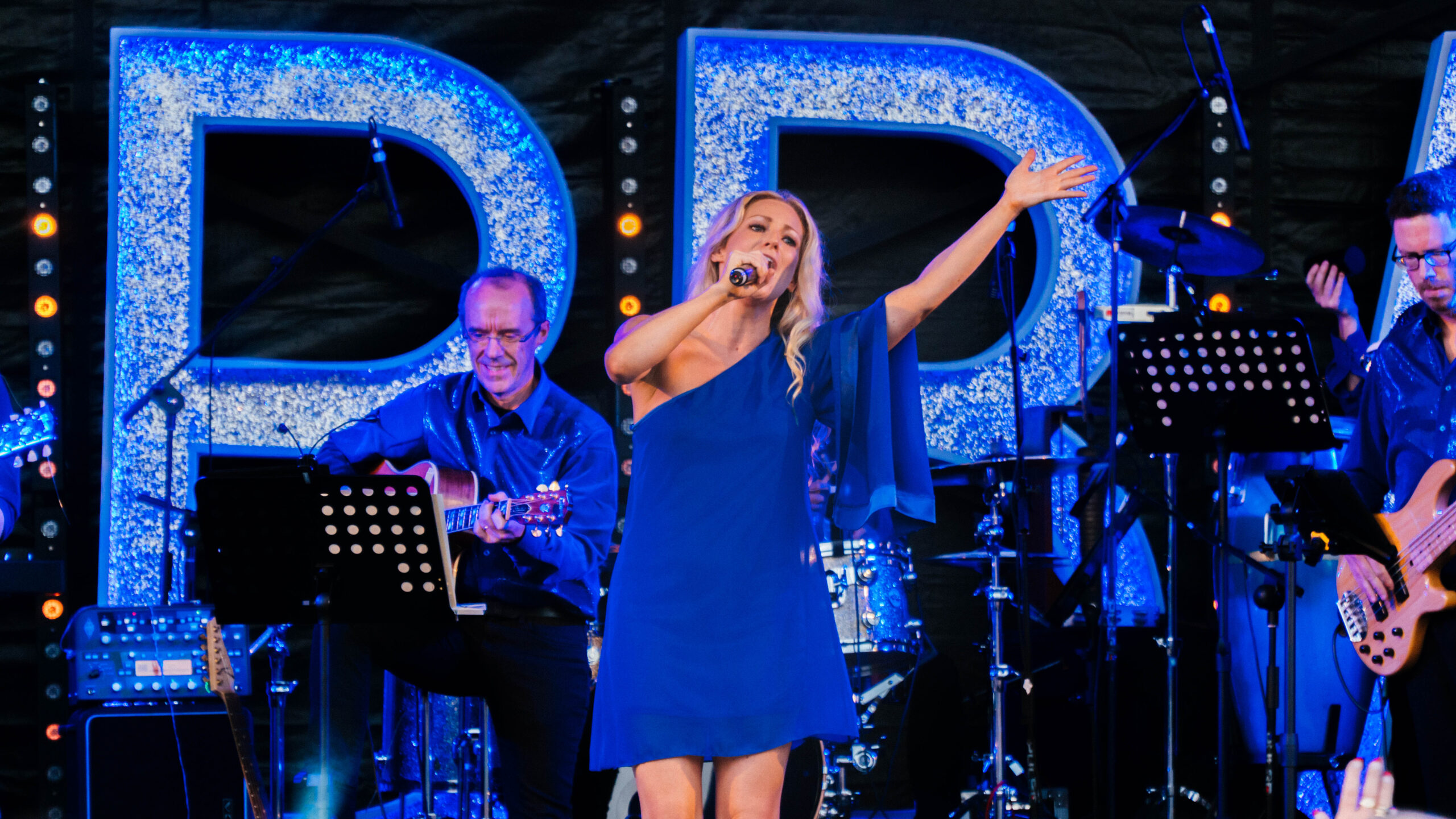
Derby’s best fireworks display returns to The OurCoop County Ground across Friday 6 and Saturday 7 November! Tickets selling fast. Book now!

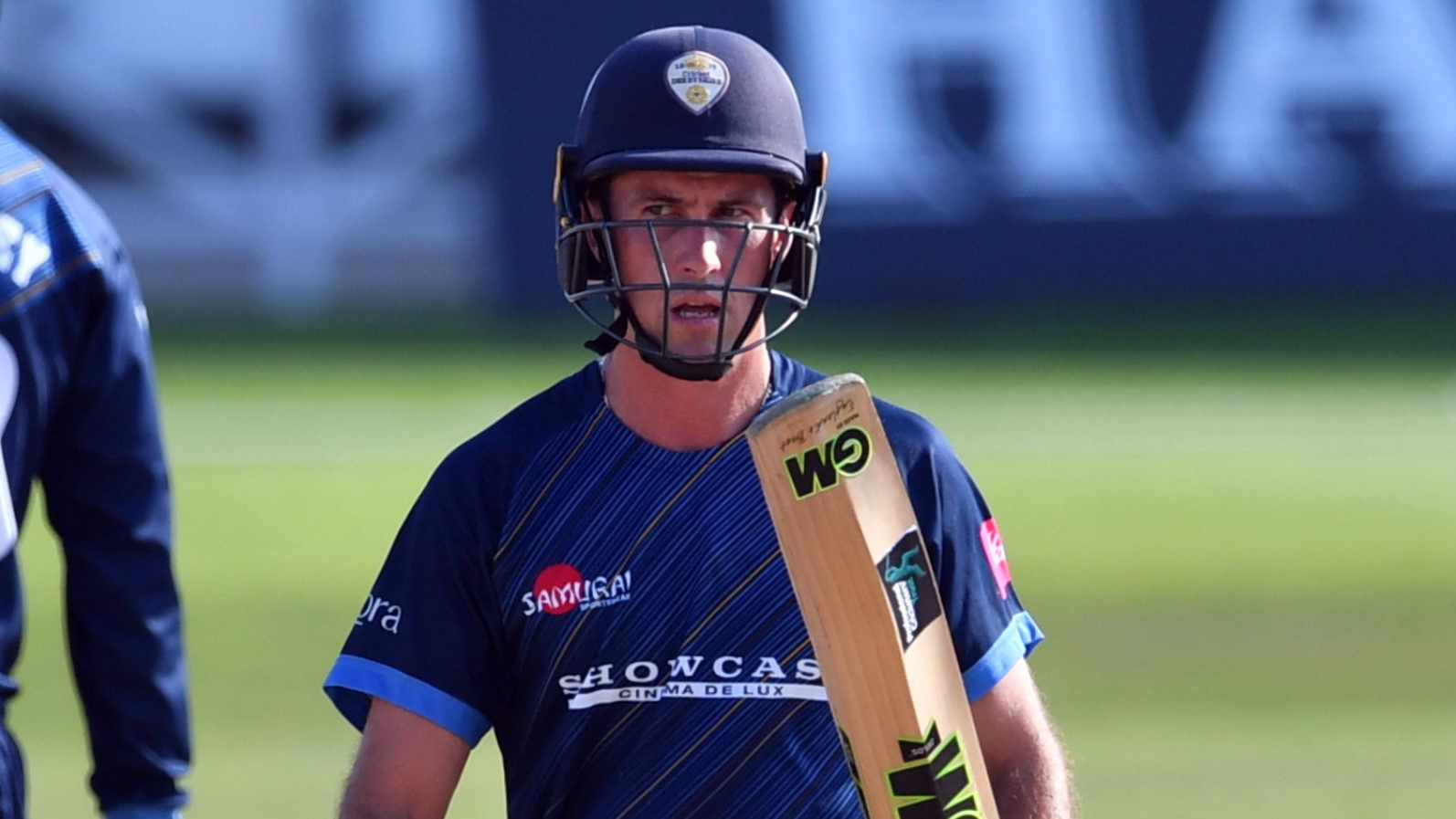
An Appreciation of Wayne Madsen’s T20 career, by Heritage officer David Griffin
Between 2003 and 2010, T20 cricket in England and Wales was in a period of gestation; initially the Twenty20 Cup, by 2010 a sponsor emerged and the competition was rebranded as the Friends Provident T20.
In 2014 it became the NatWest T20 Blast and since 2018 the Vitality Blast, albeit there was no sponsor for the limited competition which took place in the Covid-19 season in 2020.
Although every incarnation of domestic T20 cricket has included a group stage, somewhat randomly the number of matches was a mere five in 2003 and 2004, rising to eight in 2005, 2006 and 2007.
Thereafter, for two years counties played ten games before two nine-team divisions were introduced in 2011 with all counties playing 16 fixtures. This format last only two years and ever since there have been variations on two or three groups with an assorted number of scheduled matches being played.
What began as a novelty watched by traditionalists in the early days, T20 cricket has blossomed to become the most popular format in world cricket.
When Wayne Madsen made his first class debut for Derbyshire in July 2009, it was as an obdurate opener. He adapted very quickly to English county pitches and five of his first hundreds included scores of 170*, 167 and 179.
However, the quickest of those five centuries was from 180 balls and there was nothing in his early outings to suggest that he was going to become such an outstanding T20 player.
Granted, he made a fine early impression, but only in red ball cricket where a sound defence and equally sound temperament stood him in good stead.
He made his T20 debut in 2010 against Nottinghamshire at Trent Bridge and watched from the dugout as Wes Durston made a magnificent 111, reaching three figures off 51 deliveries with 11 fours and seven sixes. Madsen batted at number seven scoring five not out and then watched 19 year old Alex Hales, opening the batting for Nottinghamshire, score 69 off 25 balls. Samit Patel finished the game off with an unbeaten 62 from 27 balls as the hosts raced to victory with three overs to spare.
Durston’s hundred was the fastest in Derbyshire’s history and as he smashed the ball to all parts, eventually giving way to Hales and Patel who did the same, it was clear from the boundary edge that what had begun in 2003 as a pleasant, early evening knockabout game of cricket was being transformed by cricketers who were determined to take the game very seriously.
Madsen’s early years in T20 cricket were promising but not outstanding. Although he featured in 72 games between 2009 and 2016, he only scored 1,488 runs at an average of 25.22 with eight half centuries. Perhaps his focus was on County Championship cricket; in 2012 he captained the Derbyshire side to the second division title and in 2013 reached 1,000 first class runs in the top flight.
However, Madsen had begun to score heavily in one day matches and after the 2015 season when he scored just 169 T20 runs at an average of 18.77 he made a conscious decision which would transform his performances in the shortest format of the game.
As he told me during a Covid-19 lockdown interview in 2020:
“In the winter of 2015-16, I spent so much time learning how to hit sixes and how to hit the bowler back over his head. I then realised that I had the confidence to put them into practice – hitting over the keeper’s head, back over the bowler’s head, square of the wicket – and that transformed my game. I don’t have to hit the ball too hard; I know that if I get my technique right, the ball will go for six.”
Still mightily effective in the first class game, he scored six Championship hundreds in 2016 but in 2017 Derbyshire supporters began to see the new short form Madsen at his best.
He scored 526 runs at an average of 47.81 – his best ever season average in T20 cricket – with four fifties. He also revealed another string to his bow. Already a class act with the bat and a particularly fine fielder inside the fielding circle, Madsen took 13 wickets over the course of 47 overs, generally opening the bowling and ending the campaign with a creditable economy rate of 7.36.
John Wright and Dominic Cork, two former Derbyshire legends, had been recruited to oversee the T20 side and eight players were ever-present as Derbyshire reached their first T20 quarter final since 2005.
Billy Godleman, Matt Henry, Alex Hughes, Imran Tahir, Madsen, Luis Reece, Daryn Smit and Hardus Viljoen formed the heartbeat of the side and although the quarter final against Hampshire at Derby ended in a heavy defeat, the signs had been encouraging with Madsen the star turn over the course of the campaign.
Expectations had been raised by both Madsen and the team. The 2018 bowling attack was arguably the strongest Derbyshire had ever fielded in T20 cricket – Lockie Ferguson, Ravi Rampaul, Viljoen and Wahab Riaz formed a splendid pace attack, although Alex Hughes took the most wickets – 17 – with his medium pace. Unfortunately, Derbyshire failed to progress beyond the group stage as Madsen’s runs output dropped to 328 and, bowling far fewer overs, he took only one wicket.
However, 2019 saw Derbyshire secure another quarter final spot as Madsen registered 464 runs with four fifties. Having overcome Gloucestershire at Bristol – Madsen top-scoring with 47 as Derbyshire cruised to a seven wicket win with 17 balls to spare – they had earned their place in the sun at Finals Day.
Finals Day at Edgbaston saw Derbyshire in their first semi final since they met Gloucestershire in the Cheltenham and Gloucester Trophy in 2003. Essex were their opponents and in front of a capacity crowd were restricted to 160 for five.
Essex, however, were very experienced opponents and Simon Harmer – a thorn in the side of many counties over the years – took four wickets for 19 runs in four overs and Derbyshire subsided to a 34 runs defeat.
The Covid-19 season of 2020 saw the T20 competition reorganised, once again, into three groups of six teams, each playing ten matches.
Derbyshire endured a miserable series of games, winning a solitary match – at Leicester – and losing seven with two abandoned. All matches were played behind closed doors and as a result of The County Ground at Derby being used as an international bio-secure venue, Derbyshire played all of their games away from home.
Whilst I acknowledge it was a bonus to be able to attend these games as a member of the media, it was clearly difficult for the entire cricketing fraternity to function properly in the 2020 season with no spectators in attendance.
When 2021 dawned there was a sigh of relief that a sense of normality was returning both nationwide and to the game of cricket. For Wayne Madsen, however, a nasty injury sustained while batting at Old Trafford in the opening T20 game of the season left him stranded on 12 not out and he never played another game in the competition until the following year.
In 2022 and 2023, Madsen re-established his authority on Derbyshire T20 cricket scoring 527 runs and 580, respectively and scoring his maiden hundred in this format.
Derbyshire won seven of their last eight group games to reach the quarter finals in 2022 and Madsen delivered the perfect innings in the last group match on a sunny Sunday afternoon at Derby after Durham had posted a competitive 193 for five.
Reece fell to the fifth ball of Derbyshire’s reply which brought Madsen to the wicket. Playing every shot in his repertoire – the ramp, late cut, straight drive, cover drive, sweep, reverse sweep – he reached fifty in 25 balls and a century in 47.
Wes Durston’s 51-ball hundred, the previous record, had stood for 12 years and the man who had watched him do it from the sidelines at Nottingham in 2010 had now overtaken him at the top of the list.
It was a remarkably measured hundred by Madsen. After 17 overs he was 82 not out with his side requiring only 20 runs to win. Alex Hughes was his batting partner – always a good runner between the wickets – and between them they played sensibly to ensure both victory and a first T20 century for Madsen.
As the match-winner strode from the field, a large crowd rose to applaud him and he was greeted at the boundary fence by his wife and daughters.
The quarter final against Somerset at Taunton was eminently forgettable, but at least Derbyshire had proved their worth during the group stages and reached their third knockout tie in six seasons.
A year later, Madsen’s performances went stratospheric; he scored 580 runs, the most ever by a Derbyshire player, with six fifties – another record. At the start of the season he made a club record five consecutive scores of fifty or more: 50-61-57-109*-71* followed by 44 against Yorkshire at Leeds. Another six runs and he would have equalled the world record for the most consecutive T20 fifties.
That run included his second hundred – 109 not out – which came against Leicestershire at Leicester. He reached three figures in 56 balls and as with the century against Durham, his side came out on top.
Another 336 runs in 2025 and 431 in 2025 took Madsen close to the 5,000 run mark and he reached the landmark against Yorkshire at Chesterfield in June 2026 in the course of his 33rd T20 half century.
His announcement that he was to retire from domestic cricket allowing him to concentrate on other formats, specifically the County Championship where he captains the red ball side, has not come as a major surprise. The 20-over format is fast, intensive and seemingly evolving all the time and at the age of 42 something had to give eventually.
And it was fitting that his final game should be at Derby allowing supporters to pay their own tributes to Madsen at the end of a spectacular T20 career. He was joined by his wife and daughters as he walked to the boundary edge before continuing out to the middle where the Leicestershire players formed a guard of honour. When he returned shortly afterwards – bowled for two – he did so to a hero’s welcome.
His final total of 5,138 runs is almost two and a half times the number made by the man in second place – Durston – while his 190 appearances dwarf the 100 made by Alex Hughes.
Two centuries – he’s the only player to score two – and 33 fifties leave the next best, Durston and Reece in his wake on 15.
He scored 250 runs or more on 11 occasions, while Durston did it five times; and his 76 catches are almost twice as many as the next best. He’s also struck the most sixes – 114 – although that is one record he may have to relinquish to Aneurin Donald who is breathing down his neck with 93.
After the 2016 season when he’d been concentrating on more effective short form batting, Madsen played a further 118 T20 matches, scoring 3,650 runs at an average of 36.86 with two hundreds and 25 fifties. His transformation from obdurate red ball opener to formidable T20 operator was complete.
In the midst of all these matches and individual performances, which was Madsen’s finest innings?
The player himself rates the hundreds, especially the first one off 47 balls against Durham as his best, but my favourite – and I reckon his best – was 86 not out against Nottinghamshire at Trent Bridge in 2017.
Nottinghamshire batted first and made a daunting 227 for three with Riki Wessels scoring 110. Amidst the free scoring, Madsen bowled his four overs for 32 taking two wickets.
Batting at four, he walked out to the middle with Derbyshire on 69 for two in the sixth over. A crowd of 14,123 looked on under the floodlights as Madsen began to place the ball into the gaps in the field for four and ramping, sweeping, cutting or pulling according to whatever delivery was served up to him.
Ish Sodhi conceded 25 runs off one over as Madsen took a liking to him after Gary Wilson had begun the over with a quick single. Madsen then struck the next five deliveries for 4-6-4-6-4.
An unlikely Derbyshire victory was in sight but the challenge of hitting the final ball for six proved too much as Derbyshire lost by five runs.
As the Nottinghamshire players raced to congratulate each other on their narrow win, Madsen slumped to his haunches in the centre of the pitch. Chris Read, in a splendid example of sportsmanship, approached Madsen and placed a hand on his shoulder in commiseration.
Nottinghamshire’s bowling attack that night included Jake Ball, Dan Christian, Harry Gurney, Steven Mullaney, Samit Patel, Sodhi and Luke Wood – arguably the strongest in the tournament that summer. And as if to back up that claim, Nottinghamshire were crowned T20 champions later in the year.
Madsen’s hundreds were great, but his epic innings at Nottingham remains my favourite.
Wayne Madsen has played 17 seasons of T20 cricket at Derbyshire and set some records which may never be overtaken as it’s increasingly likely that few players will spend so many seasons with a single county. Were Wayne Madsen to join Derbyshire today as a 25 year old, would he still be here in 2043? Probably not.
The good news, of course, is that he is not retiring from all cricket and Derbyshire followers will get to see him action in white ball cricket later this month in the Metro Bank One Day Cup and of course he still has ambitions to steer his side into the first division of the County Championship.
It’s been a wonderful journey for Madsen. His was the wicket which his opponents most desired and they celebrated accordingly when he fell. On and off the field he is always unfailingly polite, a natural fan favourite who always has time for people and he’s delivered where it matters – on the field – time after time.
He cannot play for ever and there will come a time when he steps away from Derbyshire. An indication that that time is approaching is confirmed by the decision to retire from domestic T20 cricket. But he’s still around, so watch him while you can.
In the meantime, we have the memories of countless summer days when Wayne Madsen strode to the middle to entertain us, in the process becoming the finest T20 cricketer in Derbyshire’s history.
Thanks for the memories.
Wed 14th October 2026
Tue 13th October 2026
Mon 12th October 2026
Thu 8th October 2026