Derby’s best fireworks display returns to The OurCoop County Ground across Friday 6 and Saturday 7 November! Tickets selling fast. Book now!

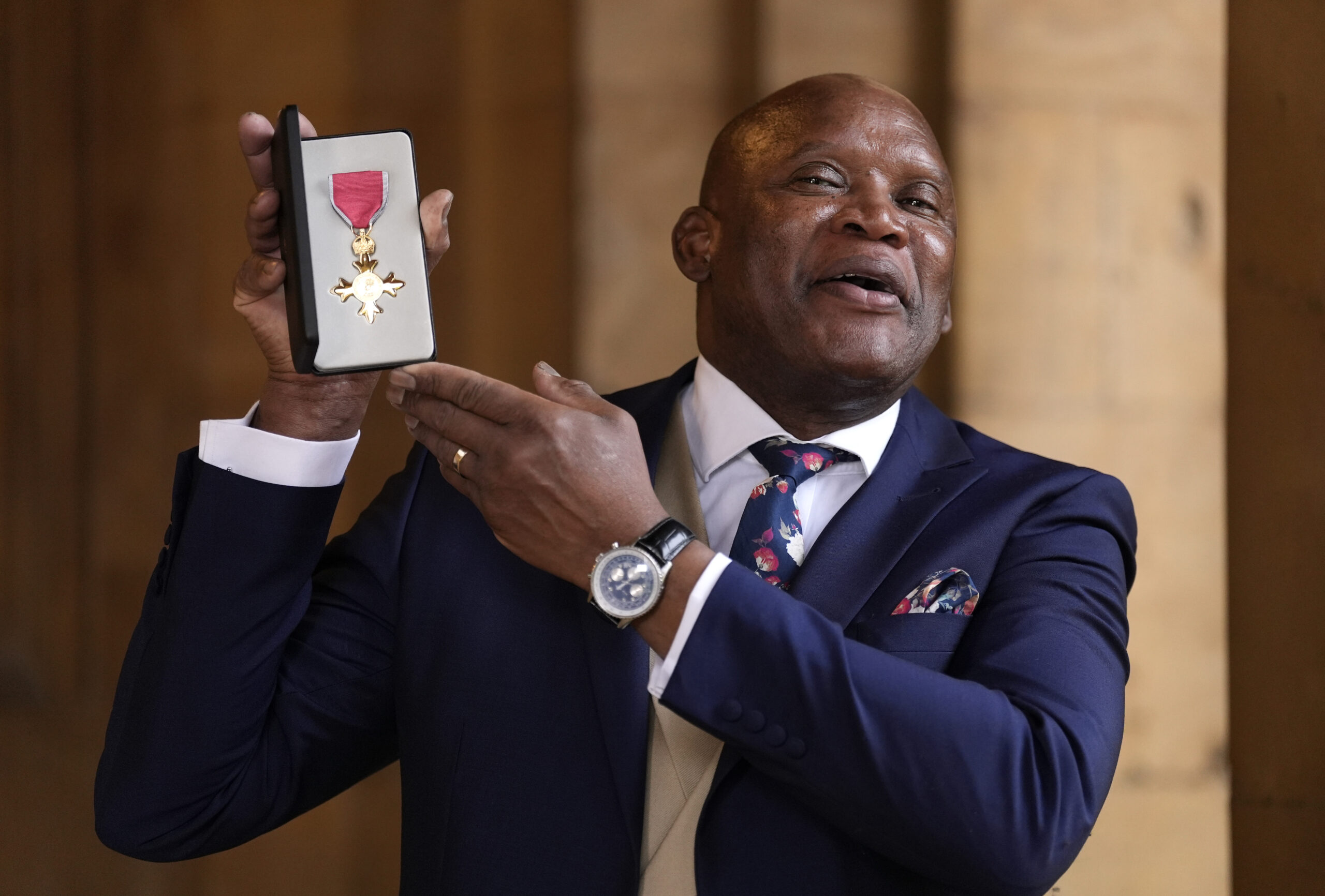
October marks Black History Month, the annual celebration of the history, achievements and contributions of black people in the UK.
Throughout October, events exploring African and Caribbean cultures and histories will take place around the UK.
Derbyshire’s Heritage Officer David Griffin looks at the black players who have made significant contributions to the club’s rich history over the course of the past century.
The first Black History Month in the UK was celebrated in 1987, a year in which black cricketers Michael Holding, Martin Jean-Jaques, Devon Malcolm and Allan Warner all featured in Derbyshire’s first eleven.
To most Derbyshire supporters, the name of Michael Holding resonates as probably the best-known black cricketer to represent the county.
One of the greatest and fastest bowlers in the history of the game, his legacy was enhanced by several decades in the commentary box where he was routinely the voice of reason which complemented his undoubted knowledge of the game.
However, over fifty years even before Holding was born, another West Indian made his impact on Derbyshire and the county game in general.
When Charles Ollivierre was born on the Windward Island of St Vincent in 1876, Derbyshire had only played 23 first class matches, and the club was very much in its infancy.
By the time he became Derbyshire’s 166th first class cricketer in 1901, he was not only the first black player to represent the county, but also just the third born outside the UK; two players having been born on the British Overseas Territories of Ascension Island and Gibraltar.
Believed to be the first black cricketer to play county cricket, Ollivierre had toured the UK in 1900 with the West Indies, and although the tour featured no matches of first-class status, Ollivierre scored 883 runs, averaging 32 with a best of 159 against Leicestershire.
He had full-time employment in Trinidad as a government clerk but nevertheless accepted Derbyshire’s offer to play first class cricket after Samuel Hill-Wood, one of the club’s most generous benefactors, employed him in his company offices in Glossop while Ollivierre awaited qualification.
He appeared in several non-Championship games, including matches against touring Australian and South African sides before his Championship debut in 1902. In his 11th match for Derbyshire, he made 167 against Warwickshire at Derby but enjoyed his greatest and most celebrated game at Chesterfield in 1904.
When Essex batted first at Queen’s Park in July of that year and scored 524 for eight on the opening day, it is highly unlikely that anyone could foresee the outcome of the game being anything other than a win for Essex, or at best, for Derbyshire, a draw.
Percy Perrin made 343 as Essex closed on 597 before Derbyshire replied with 548, Ollivierre making a career-best 229. Essex were then skittled for 97 in their second innings and with 149 required to win, Derbyshire knocked off the runs for the loss of only one wicket, Ollivierre making 92 not out. His contribution to that game – 321 runs – remained a record match aggregate for the county until 2010 when Chris Rogers scored 200 and 140 not out against Surrey at The Oval.
Ollivierre retired from the first-class game in 1907 and played club cricket in Yorkshire alongside his work in various colliery offices. He also coached schoolboy cricket in the Netherlands for 15 years up until the outbreak of World War Two.
Ollivierre died in Pontefract in 1949 and is buried in the churchyard at St Stephen’s Church in Fylingdales, North Yorkshire. The gravestone bears the inscription ‘in loving memory of a dear friend’ but incorrectly shows his birthplace as Jamaica.
A final measure of his impact in the game within Derbyshire was the unveiling of a heritage blue plaque bearing his name at Glossop Cricket Club in 2022.
However, if Ollivierre was expected to be a trailblazer for black cricketers, this was not the case as it took many years before cricketers of colour became a regular feature within the county game although Michael Frederick, a Barbadian who played a single Test match for the West Indies, appeared in two first class games for Derbyshire in 1949.
Cricketers from the West Indies were to the fore with 13 Derbyshire players born in the Caribbean, but black players from other parts of the world have also featured in Derbyshire sides alongside other players with a family heritage from those countries, but who were actually born in places like Barking and Birmingham.
Without doubt, the highest-profile player was Michael Holding, born in Jamaica and arguably as fast a bowler as any that have played the game.
Holding, was not just an outstanding bowler, however, he was also a superb source of support and advice to Kim Barnett who had inherited the Derbyshire captaincy aged just 22. He also assisted in the development of Derbyshire’s other fast bowlers, most notably Devon Malcolm, a fellow Jamaican, who would go on to play for England in 40 Test matches taking 128 wickets including a remarkable nine for 57 against South Africa at The Oval in 1994.
Malcolm actually began his Derbyshire career as an overseas player. Although he had arrived in the UK as a boy, he was still required to undergo a period of qualification before he received British citizenship which allowed him to subsequently play international cricket for England.
Holding’s influence extended to the signing of Ian Bishop, a Trinidadian with a splendid action, who spread fear through the county game during 1990 and 1992, his two principal summers with the club. A highly skilled performer, at his peak, he was as fast as any bowler in the world.
Phil DeFreitas, Dominica-born, played 44 Test matches for England, 11 of them while on the Derbyshire staff, and memorably opened the bowling with Malcolm in a Test match as Derbyshire cricketers, thus emulating their predecessors Bill Copson and Cliff Gladwin who did the same thing in 1947.
Overseas players made up the bulk of black cricketers during the latter stages of the 20th century, but UK-born black players, as suggested earlier, were also recruited by Derbyshire.
For example, in 1988, alongside Holding and Malcolm, Frank Griffith, Jean-Jacques, Rajesh Sharma and Warner, were all members of the first team squad. Sharma was born in Nairobi, Kenya, and Jean-Jacques in Dominica, but, demonstrating the greater diversity of the UK in general, the other two were born in Leytonstone and Birmingham, respectively.
Warner, known universally as ‘Jack’ in a nod to the television character PC Jack Warner, was a very fine bowler with one day cricket his absolute speciality. His record of 246 List A wickets will probably never be beaten by a Derbyshire bowler, and his ability to bowl at the death, when such a skill and tactic was still in its infancy, played a significant part in Derbyshire’s Refuge Assurance Sunday League title win in 1990 and the Benson and Hedges Cup win of 1993. He would have been a shoo-in for T20 cricket today.
Derbyshire began the 1993 season with Simon Base, Bishop, Dominic Cork, Malcolm, Ole Mortensen and Warner at their disposal – probably as good a pace line-up as any in the country, but Bishop was injured after playing only one match and the Test and County Cricket Board regulations did not allow replacement overseas players.
Bishop’s absence meant an opportunity for Frank Griffith who memorably bowled the last over of the Benson and Hedges final that summer with Lancashire requiring 11 runs to win. Conceding a mere four runs conferred folk-hero status on Griffith in Derbyshire’s last ever final win at Lord’s.
Around this time, another Essex-born cricketer, Adrian Rollins, emerged as a fine opener – and occasional wicketkeeper – capable of scoring two double centuries for Derbyshire. He also scored a remarkable hundred in a one day game against Surrey at Derby in 1995, reaching three figures off 68 balls and going on to make 126 not out as Derbyshire successfully chased 251 in only 34.5 overs.
Although South Africa has provided a large number of – mainly white – cricketers to Derbyshire, Charl Langeveldt and Robin Peterson both enjoyed brief, but productive spells at the club in the 21st century.
More recently Chesney Hughes, Anguilla-born, has been the most successful black cricketer at Derbyshire. Aside from his monumental 270 not out against Yorkshire at Leeds in 2013 – the second highest individual score ever made for Derbyshire – he scored a further nine first class hundreds and was an extremely useful white ball cricketer.
Fri 23rd October 2026
Thu 22nd October 2026

Thu 22nd October 2026
Wed 21st October 2026